August 28, 2011
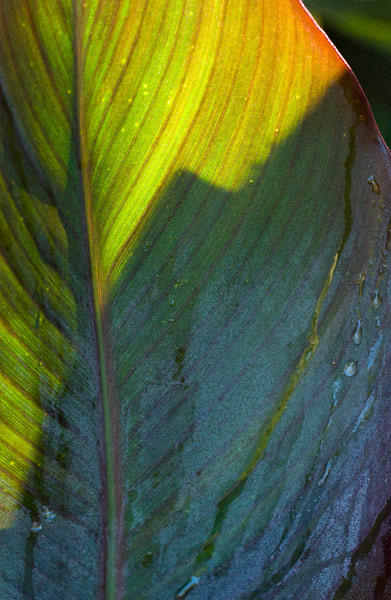
I walked down to the river yesterday for the first time in weeks. My first reward was the colorful leaves of the Wyoming Canna Lily in Schoepfle Garden proper. I shoot these plants every year, but find them just as fascinating every time. . . . Shale rocks next to or in the river are another subject that never fails to draw my attention, especially when water from rain or dew emphasizes the fractured surface. . . . Just when I had almost given up hope of seeing my favorite microbe, I came across a small patch, about four inches in diameter, of Leptothrix discophora. . . . Nearing home on the walk back, I passed our neighbor’s farm and was attracted by the three shades of pinkish wildflowers growing together in their horse pasture. The horse was a bonus. The three pinkish flowers are the invasive Purple Loosestrife (Lythrum salicaria)—that’s the brightest one—and two natives, Spotted Joe-pye Weed (Eutrochium maculatum)—the paler pink—and Tall Ironweed (Vernonia altissima)—the purplish one. I’ve wondered what or who gave Joe-pye Weed its name, and read on the web today that legend says a Colonial New England herb doctor named Joe Pye, who some say was a Native American, was skillful in treating a variety of ailments with potions he created from wild plants. He often used a group of closely related late-summer wildflowers to treat diarrhea, kidney stones, and fever, becoming famous when he stopped a typhus epidemic using his Joe-pye Weeds. . . . Googling Canna Lily, I read that this plant has been cultivated as a food crop for more than 4000 years in its native range in Central and South America. Also:
- The Canna’s pea-sized very hard seeds have been used as shotgun pellets;
- A purple dye can be extracted from the seed;
- Fibers from the stems are used to make jute and paper;
- The plants have been used to remove toxins from soils and pig waste and to remove excess fertilizer and insecticides from greenhouse runoff; and
- The Wyoming cultivar of the Canna Lily was created between 1890 and 1919 by two Americans, Antoine Wintzer and Walter Van Fleet.